


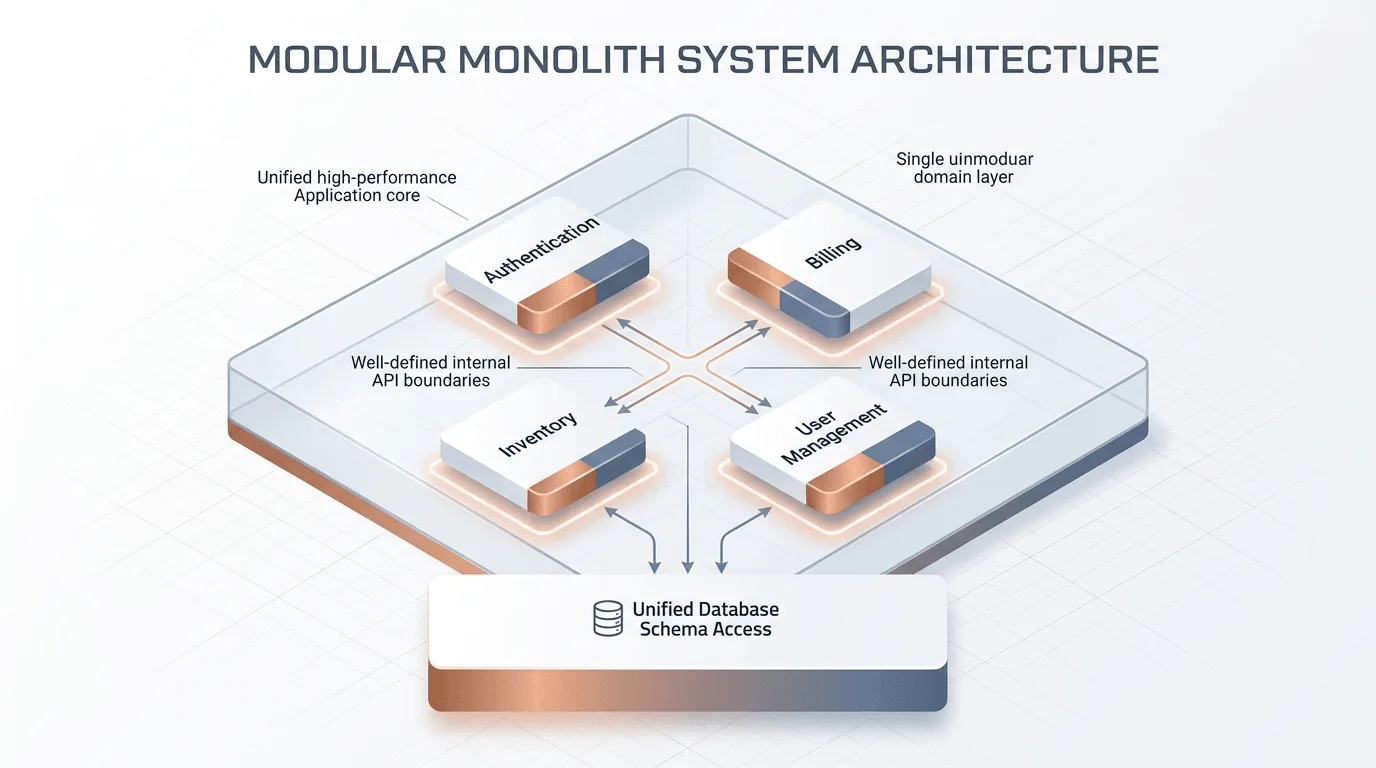
Microservices promise independent scaling and deployment. They also deliver distributed transactions, network failures, and operational overhead. For many teams the honest answer is a modular monolith: clear internal boundaries, one deployable unit.
Boundaries first, distribution later
If your modules have clean boundaries inside a monolith, extracting one into a service later is straightforward. If they do not, microservices just spread the mess across a network. Get the boundaries right and defer the distribution.
You can't buy your way out of a bad domain model with more services. Distribution multiplies the cost of unclear boundaries.
— Niharika Bhalani, Principal Solutions Architect
A useful rule of thumb
Split a service out when a specific module needs independent scaling, an independent release cadence, or a different technology not before.