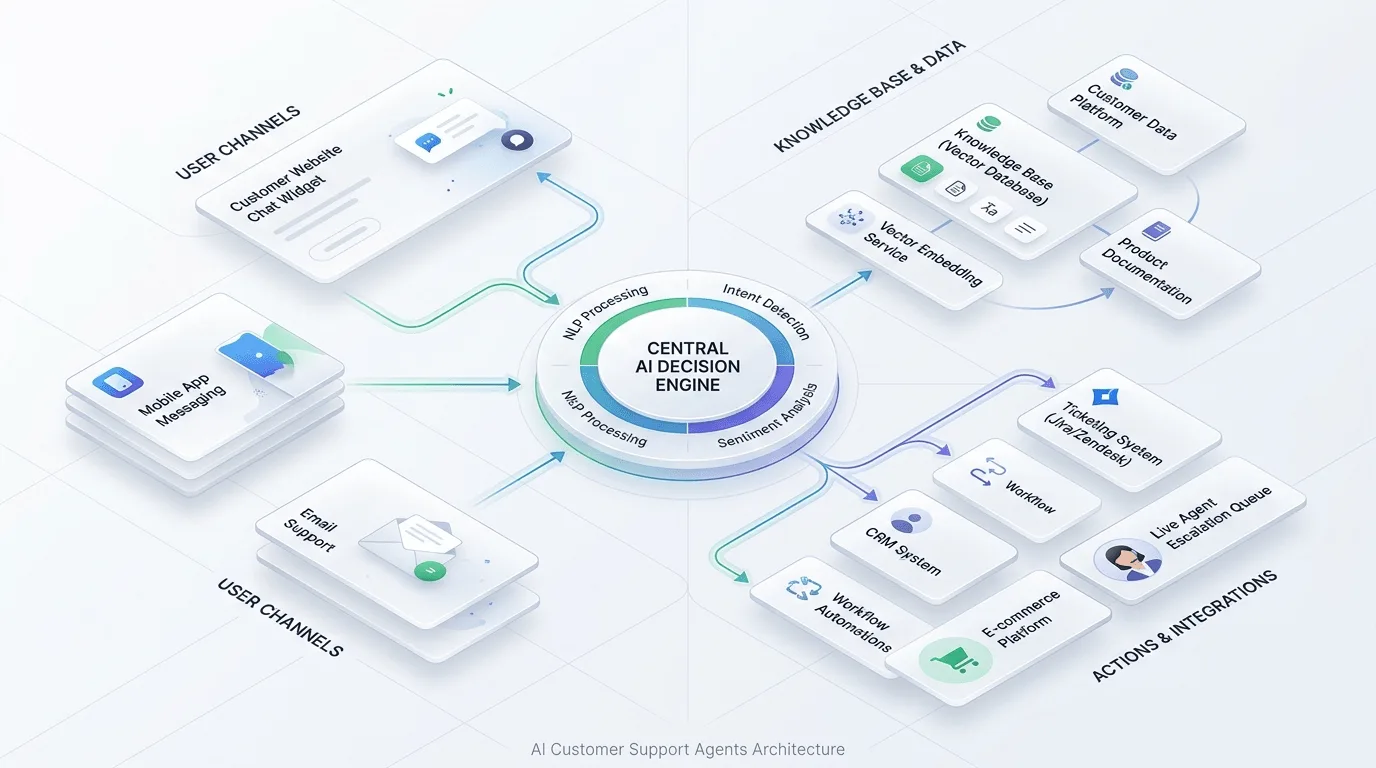



Scaling AI across an enterprise is the process of getting from small pilots to large, production deployments. This will be a giant step towards unlocking full value from AI to create significant economic value. Proper planning, integration with existing systems, and driving wide adoption through change management are imperatives for its effective scaling. Specifically, it reviews the major steps in "Moving from pilot to production," the stages of integrating AI into existing workflows and managing change.
Strategic Overview & Key Drivers
Technical Foundations & Requirements
Transitioning from Pilot to Production by Enterprise AI Implementation
Probably the most important steps in scaling up AI are from pilot projects to large-scale "AI Production Deployment." This is the stage at which learnings and insights from pilots are generalized to bigger and more complex environments. Some of the key steps follow.
"Analyze pilot results": Consider the results of the pilot. The analysis would be on whether preset objectives and performance indicators have been achieved with the AI solution; note the shortcomings.
Integrating AI with existing systems and processes.
Make sure that the AI system is designed to be scalable in light increasing of data volume, performance as well as user loads. It may also include strong data management systems, enhanced resources, and different optimized algorithms.
"Develop the maintenance and monitoring protocols": Test tools that monitor performance and status during the use of the AI solution shall be created. Further, the test devices shall be fabricated in such a way that provisions for monitoring operational performance and status will be allowed.
Processes and Learnings: Strictly log the deployment procedure and note any pilot learnings. Documentation is imperative for helping the process and acting as a reference point for other deployments.
AI Integration with Current Processes and Systems
AI integration will be considered successful if the incorporation of AI applications into the existing system and the business process occurs smoothly. AI is incorporated to facilitate enhanced operations, not disruption. Points to remember are:
Infrastructure compatibility: It should be determined whether the existing IT infrastructure is compatible with the AI solution in place. The latter would include networks, data storage, hardware, and software.
Engineering & Implementation Considerations
Execution Workflows & Best Practices
"Process Alignment": The AI system must align with the current way of conducting business. This could mean redefining workflows, automating tedium, or even decision-making, but much better, based on AI-derived insights. Artificial intelligence improves operational efficiency and provides quantifiable benefits where processes are aligned properly.
"Security and Compliance": Institution of measures on security to protect private information and to ensure all laws concerning it are complied with, including routine security audits, access limitations, and data encryption. Security and compliance guarantee a confident climate in the adoption of AI.
Effective "Change Management" will help the organization embrace AI as widely as possible. The change, in a bid to overcome organizational, cultural, and technical barriers, should be managed to have people accept AI technologies. The following are the principal strategies:
Leadership Support: Gain strong leadership sponsorship for AI efforts. "Managing change and increasing adoption" gets to the heart of implementing organizational change and securing the funding for an AI initiative.
Employee Education and Training: Provide extensive employee education and training programs that will furnish employees with the needed skills and knowledge required to work with AI.
Pilot Champions and Ambassadors: Identify those who can act as pilot champions and ambassadors to advocate for the use of AI within their teams.
Evaluate and Celebrate: Measure the AI strategy regularly and celebrate its successes. If employee achievements and contributions towards that are recognized, they will feel motivated to further adopt the AI.
Conclusion
Business Outcomes & Future Outlook
An explicit "AI Strategy" and careful "AI Execution" can help firms leverage new opportunities and create advantages. These demands scaling AI across the organization from pilot projects to large-scale production deployments, integration with current systems, and change management for its wide acceptance. Organizations can then successfully scale up AI and achieve its full potential by appropriately planning the "AI Production Deployment," seamlessly integrating "AI Integration" with current processes and implementing effective techniques of "Change Management." These programs open up the door for "AI Adoption," "Artificial Intelligence in Business," and "Enterprise AI Implementation," by generating significant commercial value and placing the corporation on the path to success in the digital age for years to come.