

Artificial intelligence (AI) plays a significant role in the business world today. AI innovations are rapidly changing certain industries. They give unparalleled favorable circumstances in productivity, imagination, and basic leadership. The article examines the role of AI, "machine learning," and deep learning in present business. It showcases their parts and advantages in companies.
Strategic Overview & Key Drivers
Technical Foundations & Requirements
An overview of artificial intelligence and Importance of AI
Artificial intelligence in business means replicating human intellect in devices. They are created to think and learn like humans. Systems such as those can solve problems, find patterns, and make decisions—faster and more precisely compared to human beings. But considering the breadth of this landscape—if one might indeed describe it as the "AI business landscape"—the systems encompass everything from advanced data analytics tools that inform corporate decisions to chatbots for customer support.
Overview of AI
AI is essential for any business in these times. It can automate activities of a repetitive nature, process heaps of data, and give unique and individual insights. This cannot be done by human beings individually. AI can contribute to businesses in many ways. It can bring efficiency, cost-effectiveness, and innovation at an unbeatable pace. It is basically predictive analytics that foresees the trends in the market and gives companies an edge over others.
Artificial Intelligence in Business
"AI Technologies in Enterprise" has wide applications in many industries, from manufacturing to retail, healthcare, and finance. Just two of many such technologies are ML and DL, the former being subcategories.
Artificial Intelligence (AI)
Machine learning refers to the process of training algorithms to learn from data. Machine Learning can, therefore, help businesses in several aspects: from demand forecasting to fraud detection to customer segmentation. It finds historical trends in data and can predict the future with extremely high accuracy. It shall thus help companies in improving consumer experience, optimizing supply chains, and customizing marketing.
Deep Learning (DL)
Engineering & Implementation Considerations
Execution Workflows & Best Practices
Deep learning, a subset of machine learning, uses intertwined layers of multiple neurons. They can also be used in processing complex data and making meaningful deductions. Pattern recognition tasks work wonderfully with DL. It may be useful for picture and speech recognition. State-of-the-art applications developed in deep learning may be useful in Industry.
Implementing AI in Enterprises
An enterprise AI requires a strategized approach that will ensure successful integration and maximum benefits. It involves a number of steps, which are pretty critical in the process:
- Artificial Intelligence Plan: A well-defined AI strategy explains the objectives, scope, and goals for AI activities. It has to do with identification of where AI is going to be most helpful in your business. Besides that, align all of your AI projects with your overall business plan.
- Data Management: AI requires access to relevant and quality data. This means that a business has to ensure good management of data. It involves acquiring, storing, and analyzing the data.
- AI Technology Selection: A company has to put in place technologies that would best suit the needs. It has to consider integration, adaptability, and scalability in the choice.
- AI projects: Success for them would mean to create internal AI expertise. This would translate into training the current employees, hiring, creating specialized talent, and cultivating a learning culture.
AI Implementation
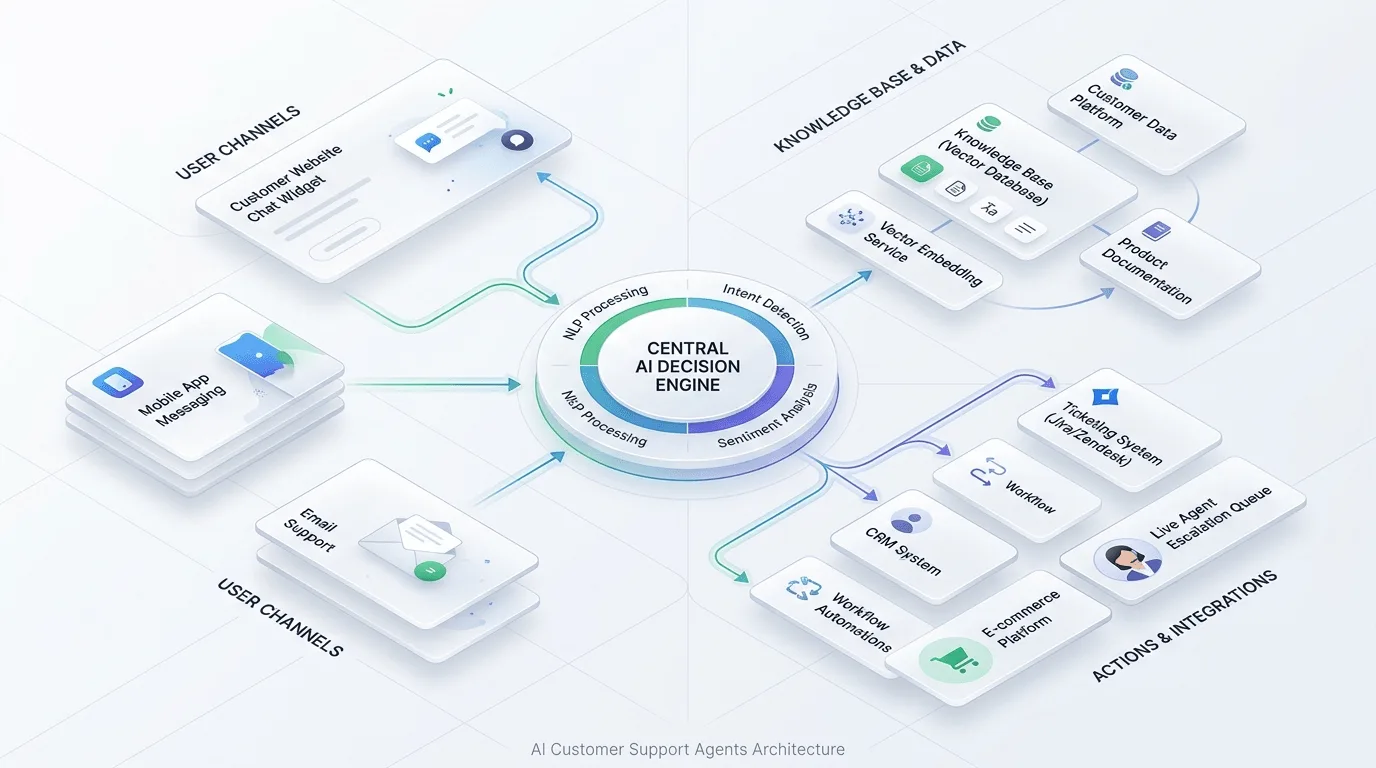
"Execution of AI" is the process of implementing AI solutions and putting them into operation for a business. IT teams require working in close liaison with the business teams to define means of integrating the technology seamlessly with the already installed systems. More importantly, some of the critical aspects of AI execution are:
- AI will be of use when it integrates with the existing business activities. We might need to re-engineer systems and procedures to utilize AI.
- "Monitoring and Evaluation": Resuming monitoring is further required in order to continue the assessment of the influence the AI solution is having. Businesses have to define metrics and KPIs that would define success. They have to use them to drive data-driven decisions.
- AI installation shall respect the legal and ethical framework under which businesses operate. Businesses shall take responsibility for their activities regarding AI in a manner that is accountable, fair, and transparent.
- "Up-Gradation and Maintenance of AI Systems": AI systems shall be updated frequently, and maintenance shall be carried out to make them function well. This includes fixing any issues, upgrading algorithms, and improving models.
Conclusion
Business Outcomes & Future Outlook
AI, ML, and DL have revolutionized business by changing the way businesses are run and fight for a place in the market. The big gains realized in productivity and creativity from AI give a clean bill of health for it in business today. With artificial intelligence, businesses can quickly recognize new opportunities that assist them in competing effectively within the business. This, therefore, calls for strategic implementation and execution of AI projects in business. For any business to thrive in this digital age, it should stay ahead because AI technologies are fast evolving.